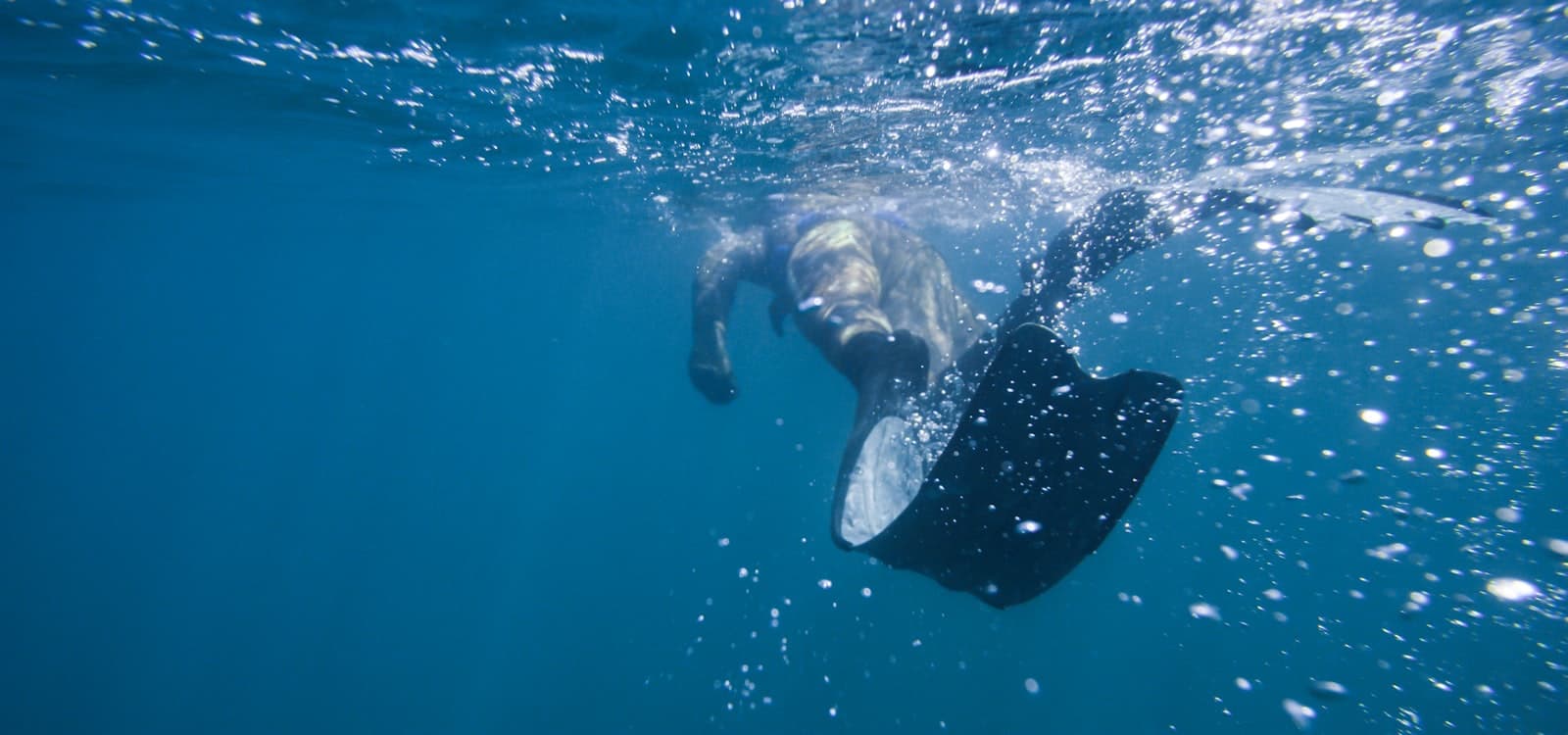
Freediving vs Scuba Diving: Key Differences Explained
Freediving and scuba diving are both ways to explore the underwater world, but they're fundamentally different experiences. One relies on a single breath and the human body's natural adaptations; the other uses compressed air tanks and mechanical regulators. If you're deciding which to try — or curious how they compare — this guide breaks down the key differences.
The Fundamental Difference
In freediving, you dive on a single breath. There's no breathing apparatus — just you and the water. Dives typically last 1–4 minutes, and you spend most of your time descending, pausing, and ascending.
In scuba diving, you carry a tank of compressed air and breathe continuously throughout the dive. Dives typically last 30–60 minutes, and you spend most of your time exploring horizontally at a relatively constant depth.
This single difference — breath-hold vs continuous breathing — creates two entirely different approaches to training, equipment, safety, and the diving experience itself.
Equipment
Freediving
Freediving equipment is minimalist:
Low-volume mask
Long, flexible fins (or monofin)
Snorkel
Wetsuit (often open-cell for warmth and flexibility)
Weight belt
Safety lanyard and line (for depth training)
Total kit cost: roughly $300–$1,500 for quality gear. Read our freediving fins guide for the most important equipment choice.
Scuba Diving
Scuba requires significantly more equipment:
BCD (buoyancy control device)
Regulator and octopus (backup regulator)
Tank (usually rented)
Dive computer
Mask, fins, wetsuit
Weight system
Owning a full scuba setup: $2,000–$5,000+, plus ongoing tank fills and equipment servicing.
Training and Certification
Both activities require proper training, but the focus is very different:
Freediving courses focus on breath-hold physiology, equalization, relaxation techniques, body position, and rescue protocols. A Level 1 course typically takes 2 days. Read what to expect from your first freediving course.
Scuba courses focus on equipment operation, dive planning, gas management, buoyancy control, and emergency procedures. Open Water certification typically takes 3–4 days.
Freediving certification bodies include AIDA, Molchanovs, PADI, SSI, and FII. Scuba certification bodies include PADI, SSI, NAUI, and BSAC. Compare freediving certification agencies.
Depth and Duration
Recreational freediving: Most trained freedivers operate between 10–30 metres, with dives lasting 1–3 minutes.
Recreational scuba: Typical depth limit is 18–40 metres, with dives lasting 30–60 minutes.
Competitive/technical: Elite freedivers reach 100+ metres; technical scuba divers go beyond 40 metres with mixed gases.
Scuba allows far longer bottom times but requires decompression management for deeper or longer dives. Freediving has virtually no decompression risk for single dives but requires careful management of oxygen levels on ascent. Learn about freediving depth limits.
Safety Considerations
Freediving Risks
Shallow water blackout: Loss of consciousness near the surface due to dropping oxygen partial pressure. This is the primary risk and is managed by always diving with a buddy. Read about shallow water blackout.
Equalization barotrauma: Ear or sinus injuries from inadequate equalization.
Lung squeeze: At extreme depths, possible lung barotrauma if the blood shift is insufficiently developed.
Scuba Risks
Decompression sickness (the bends): Nitrogen bubbles forming in blood/tissues from ascending too quickly.
Air embolism: Lung over-expansion from holding your breath while ascending on scuba (never hold your breath on scuba).
Equipment failure: Regulator malfunction, out-of-air situations.
Nitrogen narcosis: Impaired judgment at depth from elevated nitrogen partial pressure.
Both activities are safe when practised with proper training and respect for protocols. The buddy system is essential in both. Learn about the freediving buddy system.
The Experience
This is where the two diverge most dramatically:
Freediving is often described as meditative, introspective, and intensely connected to the body. You're acutely aware of every sensation — the pressure, the silence, the weightlessness of freefall. It's a deep internal experience. Many freedivers describe it as the closest thing to flying.
Scuba is more about external exploration. You have time to observe marine life, explore wrecks, swim through caves, and take photographs. The continuous breathing makes it feel more relaxed, but you're always aware of your equipment, gas supply, and depth limits.
Neither is better — they're simply different. Many divers do both.
Cost Comparison
Freediving course: $250–$500 for Level 1
Scuba course: $400–$800 for Open Water
Freediving gear: $300–$1,500 (one-time, minimal maintenance)
Scuba gear: $2,000–$5,000+ (plus servicing, tank fills, boat fees)
Ongoing freediving costs: Minimal — just you and the ocean
Ongoing scuba costs: Tank fills, boat charters, equipment servicing, dive travel
Freediving is significantly cheaper in the long run, which is one reason for its growing popularity.
Environmental Impact
Freediving has a notably smaller environmental footprint. No bubbles means less disturbance to marine life — fish and sea creatures are often more comfortable around freedivers than scuba divers. There's no heavy equipment to damage coral, no compressed air production, and minimal gear manufacturing impact.
Many marine biologists and underwater photographers prefer freediving for exactly this reason — closer encounters with less disruption.
Which Should You Try?
Try freediving if you're drawn to personal challenge, breath-hold physiology, minimalism, and a meditative experience. If you want a low-cost entry point and enjoy pushing personal boundaries, freediving is rewarding from day one.
Try scuba if you want to spend extended time underwater, explore wrecks and reefs at leisure, and prefer a more gear-oriented, exploration-focused experience.
Try both — many divers cross-train. Skills from each discipline complement the other. Freediving improves your air consumption and comfort on scuba; scuba builds water confidence that helps in freediving.
Ready to start your freediving journey? Read about what to expect from your first freediving course, or explore our education resources for structured learning paths.