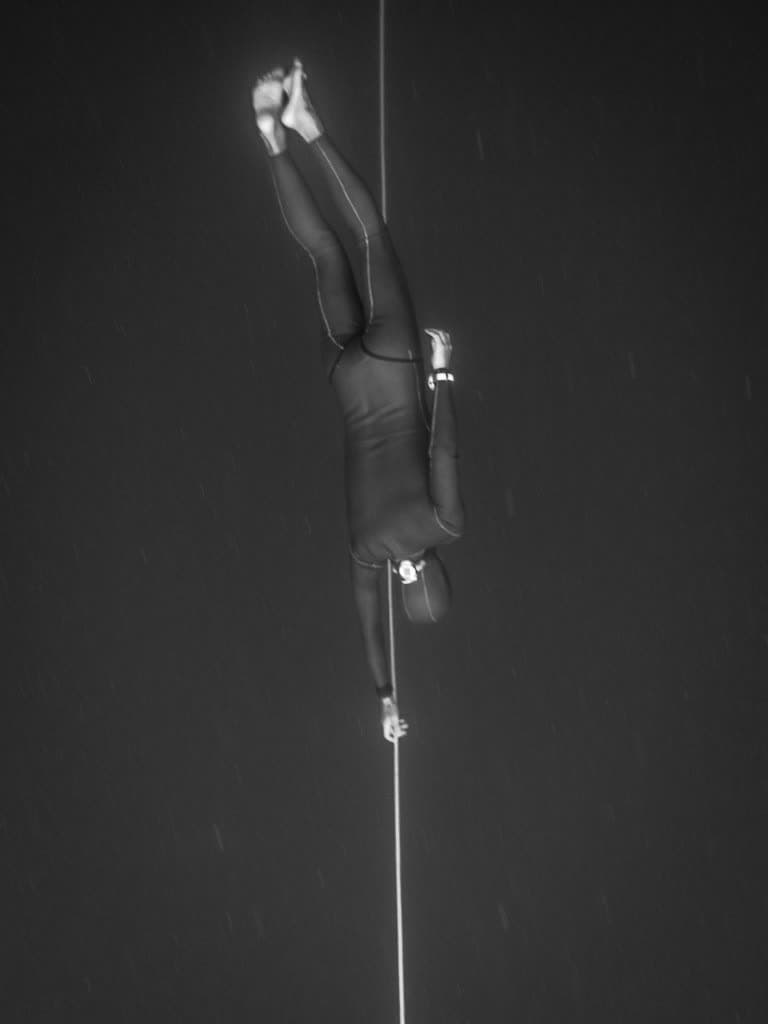
Mouthfill Equalization Tutorial: The Deep Diving Gateway
Mouthfill equalization is the advanced technique that unlocks freediving depths beyond 30-40 metres. Once you reach residual volume — the depth where your lungs compress so much that there's no air left to equalize with — standard Frenzel equalization stops working. Mouthfill is the solution. This tutorial breaks down the technique step-by-step.
What Is Mouthfill Equalization?
Mouthfill is a method of storing air in your mouth and using that air alone to equalize, without drawing from your lungs. Here's why it matters:
At shallow depths (0-20m), you have plenty of lung volume. Standard Frenzel equalization works by compressing air in your lungs and transferring it to your middle ears.
At intermediate depths (20-35m), lung compression reduces available air but Frenzel still works with effort.
Beyond residual volume (typically 35-45m for most divers), your lungs physically cannot provide air for equalization. This is where mouthfill becomes essential.
The depth at which you hit residual volume depends on your lung capacity, body composition, and training. Understanding how pressure affects your body is fundamental — read our guide to Boyle's Law and equalization.
Residual Volume and FRC Depth
Two key concepts:
Functional Residual Capacity (FRC) — the volume of air in your lungs after a normal (not forced) exhale.
Residual Volume (RV) — the air remaining in your lungs even after a maximum forced exhale.
Your FRC depth is where your lungs compress to functional residual capacity — typically 30-40 metres for most divers. Beyond this depth, your lungs reach or approach residual volume, and the blood shift kicks in to protect them from collapse. Learn how the blood shift protects your lungs at depth.
Once you're at or near residual volume, there's simply no air left in your lungs to perform a standard Frenzel equalization. That's where mouthfill saves the day.
How Mouthfill Works: The Three Phases
Phase 1: The Charge (Pre-Dive)
Before you dive, you pre-load your mouth with air. This is called "charging the mouthfill."
Take a full breath (your dive breath)
Using your tongue as a piston, push air from your lungs into your mouth, filling your cheeks and the space under your tongue
Close your glottis (the back of your throat) to seal the air in your mouth
Your mouth should now be holding 50-100ml of air completely separate from your lungs
This air in your mouth is your "mouthfill reserve" — you'll use it for all equalizations during the dive.
Phase 2: The Descent (Using the Mouthfill)
As you descend, equalize using only the air in your mouth, not your lungs:
Pinch your nose
Use your tongue and jaw to compress the air in your mouth, forcing it into your middle ears (just like Frenzel)
Release, repeat as needed every few metres
Because the air is only in your mouth, your lungs remain passive. This is crucial at depth where lung compression makes traditional Frenzel impossible.
Phase 3: The Recharge (Mid-Dive)
After several equalizations, your mouthfill reserve runs low. At this point:
Open your glottis briefly
Draw a small amount of air from your lungs back into your mouth using a reverse Frenzel motion
Close the glottis again
Continue descending and equalizing
Advanced freedivers recharge 1-2 times during a deep dive. Each recharge uses a tiny amount of lung air, but it's far more efficient than trying to Frenzel from compressed lungs.
Step-by-Step: Learning Mouthfill on Dry Land
Mouthfill is a motor skill that requires practice. Here's how to train on land before attempting it in water:
Drill 1: Charging the Mouthfill
Sit or stand comfortably
Take a moderate breath (not maximum)
Close your glottis (imagine holding your breath but keep your throat closed)
Push your tongue forward and upward, forcing air from your lungs into your mouth
Your cheeks should puff out
Hold for 10-20 seconds, then release
Repeat 10 times daily. The goal is to isolate the tongue motion and build cheek capacity.
Drill 2: Mouthfill Equalization
Charge a mouthfill
Pinch your nose
Use your tongue and jaw to compress the air in your mouth, forcing it toward your ears (listen for the "pop" or pressure shift)
Do NOT draw from your lungs — throat stays closed
Perform 5-10 equalizations from a single mouthfill charge
If you can't equalize, your mouthfill isn't pressurized enough. Refine your tongue-piston motion.
Drill 3: The Recharge
Charge a mouthfill
Perform 3-4 mouthfill equalizations (depleting your reserve)
Open your glottis and perform a reverse tongue motion to draw air from your lungs back into your mouth
Close glottis, continue equalizing
This is the hardest part. It takes weeks to develop the coordination. Be patient.
Common Mouthfill Mistakes
1. Opening the Glottis Too Early
If you unconsciously open your throat, you'll revert to standard Frenzel and defeat the purpose. Practice glottal control daily. Some divers place a finger on their throat to feel if the glottis opens involuntarily.
2. Insufficient Mouthfill Volume
If you only charge 20-30ml, you'll run out of air after 2-3 equalizations. Work on expanding your oral cavity — some divers can store 100ml+ with practice.
3. Forgetting to Recharge
Beginners often exhaust their mouthfill and then struggle to equalize at depth. Plan your recharges: typically one at 25-30m and another at 35-40m for a 45m+ dive.
4. Jaw and Tongue Tension
Mouthfill requires precise muscle control but not tension. Tension wastes oxygen and causes fatigue. Practice until the motions are smooth and relaxed.
When to Start Learning Mouthfill
Most freedivers begin mouthfill training when they consistently reach 25-30 metres and feel equalization becoming difficult. Prerequisites:
Solid Frenzel technique (effortless equalization to 20-25m)
Comfortable with depth and pressure
Good body awareness and motor control
Training with a qualified instructor or experienced buddy
Do NOT attempt to teach yourself mouthfill in open water without supervision. Work with a freediving instructor who specializes in depth training. Learn how to evaluate a freediving instructor.
Mouthfill and Safety
Safety Warning: Mouthfill is an advanced technique for deep diving. It should only be practiced under professional instruction and with a trained safety buddy. Attempting mouthfill without proper training increases the risk of barotrauma, failed equalizations, and depth-related injuries.
Key safety considerations:
Never force it — if mouthfill equalization isn't working, abort the dive. Forcing equalization at depth causes barotrauma.
Know your limits — mouthfill extends your depth capability, but it doesn't eliminate other risks like narcosis, blackout, or lung squeeze. Understand the risks of deep freediving.
Always dive with a trained buddy who understands deep diving protocols. Read about the buddy system.
Progression Timeline
Realistic timeline for learning mouthfill:
Week 1-2: Dry practice — charging, equalizing, recharging on land
Week 3-4: Shallow water practice in pool (3-5m) — test the mechanics without depth pressure
Month 2: Gradual depth progression in open water with instructor (20m → 25m → 30m)
Month 3+: Refining technique and building confidence to 35-40m and beyond
Some divers master it in weeks; others take 6+ months. It's not a race. Depth progression should always be gradual. Read about safe depth progression.
📚 Educational Content Only: This guide is for educational purposes and does not replace professional freediving instruction. Before attempting any breath-hold training, equalization techniques, or depth diving, you must complete a certified freediving course with a qualified instructor (AIDA, PADI, SSI, Molchanovs, or FII). Never practice breath-holding in water without a trained safety buddy present.
Key Takeaways
Mouthfill allows equalization beyond residual volume (typically 35-45m)
It involves pre-loading air in your mouth and using it independently from your lungs
Requires weeks of dry practice before attempting in open water
Essential for depths beyond 40 metres but not needed for recreational freediving
Must be learned under professional instruction — never self-taught at depth
Mouthfill is one of the major milestones in a freediver's depth progression. Combined with proper training, breath-hold work, and gradual progression, it opens the door to the deep blue.
Equalization Mastery — Complete Series
- 1Equalization Techniques: A Complete Guide
- 2Boyle's Law and Equalization: Why the First 10 Meters Matter Most
- 3Frenzel Equalization: Complete Troubleshooting Guide
- 4Mouthfill Equalization Tutorial: The Deep Diving Gateway