
How to Evaluate a Freediving Instructor Before You Book
Unlike scuba diving where equipment failure can be mitigated, freediving relies almost entirely on proper training and instructor competency. Your instructor's knowledge could literally save your life. They're responsible for teaching you how to recognise the warning signs of hypoxia, how to rescue an unconscious diver, and how to manage the unique risks of breath-hold diving.
Commercial training providers naturally present their instructors in the best light. Independent guidance on evaluating instructors before you commit is virtually non-existent. This creates an information gap that leaves students vulnerable to substandard training.
This guide provides concrete, actionable steps to verify credentials, identify red flags, and ask the right questions — empowering you to make an informed decision. As an independent resource with no commercial relationships, we can share what training providers typically won't.
Verify Credentials
Legitimate instructors will gladly provide verification. Reluctance to share credentials or difficulty verifying them is itself a red flag. Every major certification agency maintains public databases specifically for consumer protection.
AIDA Instructor Database
AIDA maintains a searchable public database of all certified instructors at aidainternational.org/Instructors. You can search by name, country, city, and instructor level.
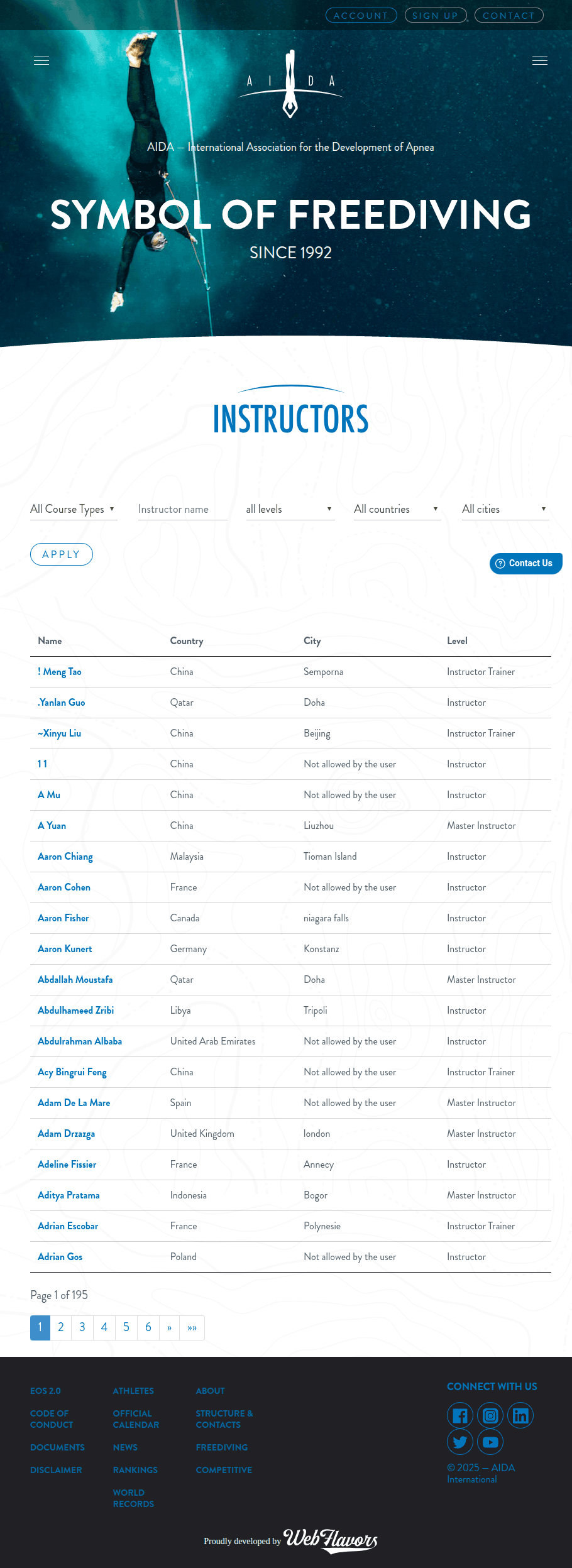
What to look for:
Instructor Level: Instructor, Master Instructor, or Instructor Trainer. Higher levels indicate more experience and authority to teach advanced courses.
Active Status: AIDA instructors must maintain active membership and current first aid certification to teach.
Course Types: Filter by course type to confirm they're authorised to teach the specific course you're interested in.
PADI Pro Chek
PADI provides their Pro Chek verification tool at apps.padi.com/scuba-diving/pro-chek. You'll need the instructor's PADI member number to search.
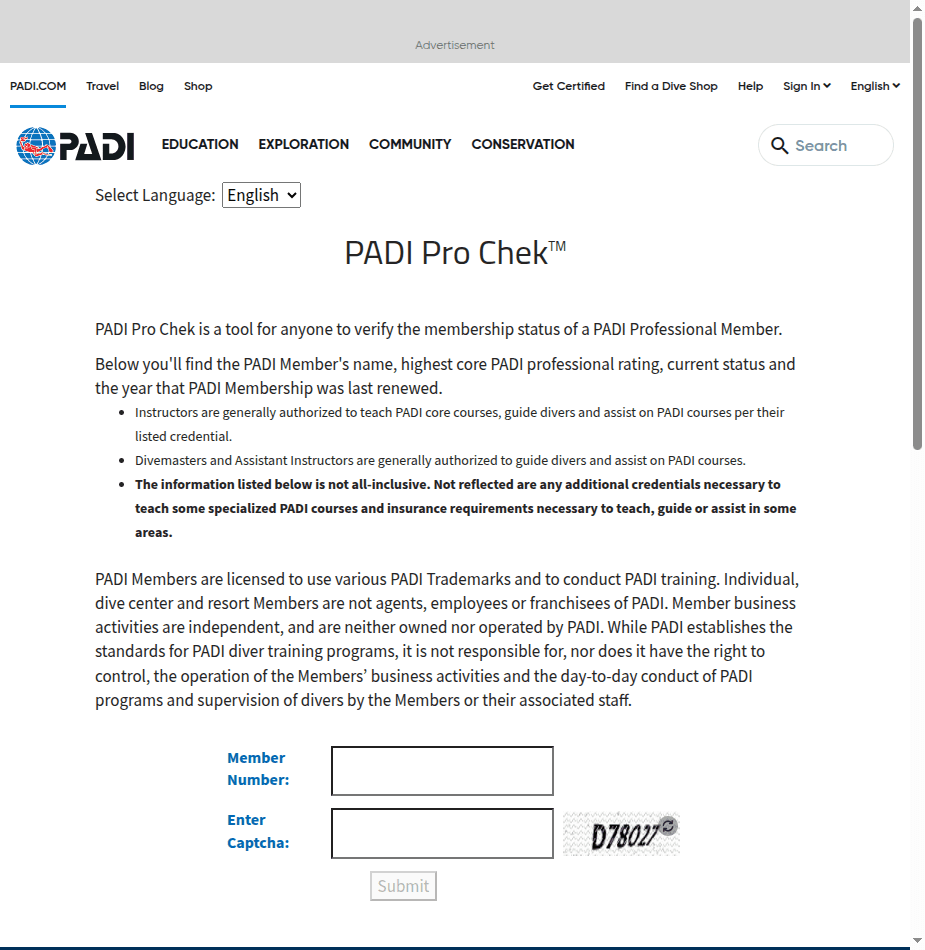
The results show:
Member's name and highest professional rating
Current membership status (active or expired)
Year of last membership renewal
Teaching status — critically important for confirming they can actually conduct courses
SSI Professional Verification
SSI doesn't maintain a public-facing instructor database. To verify an SSI instructor, you can contact the dive centre they're affiliated with or reach out to SSI directly. Legitimate SSI instructors will be able to provide their instructor number and affiliated centre details.
Molchanovs Instructor Registry
Molchanovs maintains instructor information through their certification system. Instructors are certified at Wave levels (Wave 1, Wave 2, Wave 3) which determine what courses they can teach. You can verify instructors through the Molchanovs website or by contacting them directly.
First Aid Currency
All major agencies require instructors to hold current first aid certification (typically renewed every two years). Ask your instructor: "When did you last complete first aid training?" and "Can you confirm your certification is current?"
What if they claim credentials from an agency you can't verify online? This itself warrants caution. Major agencies maintain public instructor databases specifically for consumer protection. Obscure certifications that can't be independently verified should be questioned.
Insurance Verification
Professional liability insurance isn't just paperwork — it's a baseline indicator of professionalism and accountability. Instructors who maintain proper insurance demonstrate they take their responsibilities seriously and have met the requirements set by underwriters.
Why insurance matters:
Protects both you and the instructor in case of incidents
Required by most certification agencies for active teaching status
Insurance providers conduct their own vetting — instructors must meet certain standards to be insurable
Demonstrates the instructor is operating as a professional, not just recreationally
What to ask: "Can you confirm you hold current professional liability insurance for freediving instruction?"
Common providers include DAN (Divers Alert Network) and agency-endorsed insurance partners. Note that instructor liability insurance is separate from student dive accident insurance, which you should also consider purchasing for your own protection.
Safety Equipment and Protocols
The presence (or absence) of proper safety equipment reveals an instructor's priorities. Professional instructors invest in safety equipment and have clear protocols for emergencies. This isn't optional — it's fundamental to safe training.
Essential equipment to ask about:
Surface marker buoy / dive flag for open water training — legally required in many jurisdictions and essential for boat traffic safety
Emergency oxygen kit — critical for responding to hypoxic events
First aid kit appropriate for aquatic emergencies
Working communication device and emergency action plan
Lanyard and line system for depth training
Protocol questions to ask:
"What's your student-to-instructor ratio?" — ideally 4:1 or better for open water training
"How do you handle a blackout scenario?" — they should be able to explain their rescue protocol clearly
"What's your emergency action plan for this location?" — site-specific planning indicates professionalism
For more on why these safety measures matter, see our guide to shallow water blackout — understanding the risks helps you evaluate whether an instructor takes them seriously.
Red Flags to Watch For
Trust your instincts, but also know the specific warning signs. These red flags don't necessarily mean an instructor is incompetent, but they warrant further investigation or reconsidering your choice.
Credential Red Flags
Reluctance to share certification number or verification details
Claims of "equivalent" certifications from unknown bodies
Instructor credentials that don't match the advertised course level
Expired first aid certification or inability to confirm currency
No verifiable entry in the certification agency's instructor database
Communication Red Flags
Dismissive responses to safety questions
Pressure to book immediately with "spots filling fast" urgency tactics
Vague answers about course structure, locations, or schedule
No written terms, refund policy, or course outline provided before booking
Defensive or hostile reaction to reasonable questions
Operational Red Flags
Very high student-to-instructor ratios (8:1 or worse)
Course duration significantly shorter than agency standards
Pricing dramatically below market rate — ask yourself what they're cutting
No clear open water training plan or reliance on "we'll see how we go"
Training locations that seem inappropriate or unsafe
Personal Red Flags
Ego-driven focus on personal depth records rather than teaching
Downplaying safety concerns or risks
Uncomfortable personal boundaries or inappropriate comments
Dismissing the value of certification standards or rescue training
Check Reviews and Reputation
Credentials tell you someone passed a course. They don't tell you if they're a good teacher — or a good person. Some instructors look perfect on paper but create uncomfortable, unsafe, or simply poor learning environments. Reviews and reputation research can reveal what credentials cannot.
Where to Look
Google Reviews — search for the instructor's name or their dive centre. Look for patterns across multiple reviews, not just the overall rating.
Facebook — check their business page reviews, and search freediving groups for mentions of their name.
Local freediving communities — join Facebook groups or forums for freedivers in your area. Ask directly: "Has anyone trained with [instructor name]?"
Reddit — search r/freediving for the instructor or dive centre name.
TripAdvisor — if they operate through a dive centre, check for reviews there.
What to Look For
Pay attention to comments about:
Teaching style — patient and encouraging, or dismissive and ego-driven?
Safety focus — do reviews mention thorough safety briefings, or rushing through protocols?
Communication — responsive and professional, or difficult to reach and disorganised?
Behaviour — respectful and professional, or inappropriate comments or boundary issues?
Handling problems — how did they respond when things didn't go perfectly?
Student outcomes — do students feel confident and well-prepared after the course?
Red Flags in Reviews
Multiple mentions of feeling rushed, pressured, or unsafe
Comments about inappropriate behaviour or unprofessional conduct
Patterns of poor communication or last-minute changes
Reviews mentioning ego or arrogance — instructors who focus on their own achievements rather than student learning
Defensive or aggressive responses to negative reviews from the instructor
Suspiciously uniform 5-star reviews with generic language (may indicate fake reviews)
Ask the Community Directly
Don't be shy about asking for recommendations. Post in local freediving groups: "I'm looking for a freediving course in [location]. Has anyone trained with [instructor] or can recommend someone?" The freediving community is generally helpful, and experienced divers will often share honest assessments.
If an instructor has been in the community for years but you can't find anyone willing to vouch for them — or if people respond with vague warnings or awkward silences — that tells you something.
Remember: A technically qualified instructor who makes students uncomfortable, dismisses concerns, or creates a negative learning environment is not a good instructor, regardless of their credentials. Trust matters in freediving — you're literally putting your life in their hands.
Questions to Ask Before Booking
Professional instructors welcome thorough questions. It demonstrates you're a serious student who values safety and quality. If an instructor seems annoyed by reasonable questions, that's information in itself.
About Qualifications
"What's your certification number? Can I verify it online?"
"How long have you been teaching freediving?"
"How many students have you certified at this level?"
"What's your own freediving experience and background?"
About the Course
"What's included in the course fee? Any additional costs?"
"What equipment is provided versus what do I need to bring?"
"What's the maximum class size?"
"Where will pool and open water sessions take place?"
"What happens if weather prevents open water training?"
About Safety
"What safety equipment do you bring to every session?"
"What happens if conditions aren't suitable for open water?"
"Do you carry professional liability insurance?"
"What's your protocol if a student has a blackout or LMC?"
About Policies
"What's your cancellation and refund policy?"
"What if I don't pass the required performances?"
"Do you provide any written course materials?"
"Will I receive documentation of my completed skills?"
Document Your Experience From Day One
Documentation protects both you and future students. This isn't about expecting problems — it's about professionalism and accountability. Good instructors appreciate organised students.
Keep email and message records of all pre-course communications
Save receipts and any written terms or agreements
Note dates, times, and locations of all training sessions
After the course, request copies of your completed skills checklist
If something concerns you during training, document it immediately while details are fresh
If you have a positive experience, documentation also helps you recommend that instructor to others with specific details about what made them good.
What to Do If Something Goes Wrong
Know your options before you need them. Most freediving training goes well, but if you encounter problems, having a clear path forward is important.
Steps to take:
Raise concerns directly with the instructor first — give them the opportunity to address the issue
Escalate to dive centre management if the instructor operates through a centre
Report to the certification agency — AIDA, PADI, SSI, and Molchanovs all have complaint processes for standards violations
Contact consumer protection bodies — in Australia, this means your state's Fair Trading or Consumer Affairs office
Leave honest reviews on Google and relevant platforms to inform future students
If you've had a concerning experience with freediving instruction, we encourage you to share your experience. Your feedback could help others make informed decisions and contribute to improving standards across the industry.
Making an Informed Choice
The vast majority of freediving instructors are dedicated professionals who genuinely care about student safety and success. The guidance in this article isn't about distrust — it's about informed decision-making.
Good instructors welcome scrutiny. They're proud of their credentials and happy to answer questions. They understand that students who ask thoughtful questions about safety are likely to be engaged, responsible divers.
By taking the time to verify credentials, ask the right questions, and watch for red flags, you're not just protecting yourself — you're supporting the professionals who maintain high standards and making it harder for those who cut corners.
For more background on certification systems and what they mean, see our comprehensive guide to freediving certifications. For Melbourne readers looking to compare specific training providers, our Melbourne course comparison provides independent analysis of local options.
Ready to start your freediving journey the right way? Make sure you also understand what to expect from your first course and why the buddy system is non-negotiable in this sport.
Courses & Certification — Complete Series
- 1Freediving Certifications: AIDA, PADI, SSI, Molchanovs & FII Comparison Guide
- 2AIDA vs CMAS: The Fractured World of Freediving Governance
- 3How to Evaluate a Freediving Instructor Before You Book
- 4My Experience with Drifters Freediving Melbourne: Training Standards and Safety Concerns
- 5How Freediving's Governing Bodies Are Failing the Sport: What Every Freediving Student Should Know
- 6Manual of Freediving Review: The Definitive Guide to Underwater Breath-Hold Diving