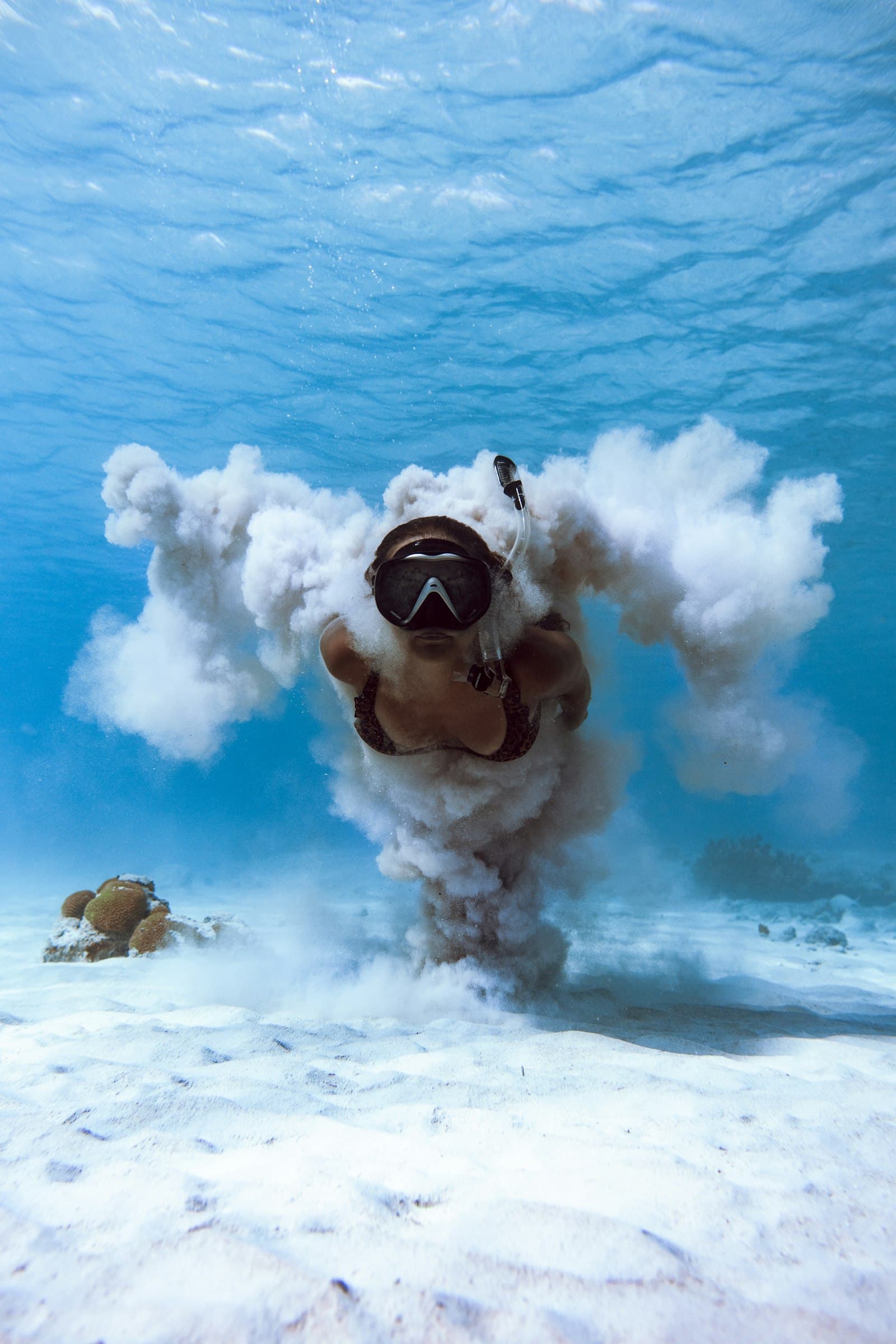
Freediving Mask Buying Guide: How to Choose the Right Mask
Your freediving mask is more than just a way to see underwater — it's a critical piece of safety equipment that affects equalization, comfort, and performance. The wrong mask can cause ear squeeze, exhaust your air supply, and cut dives short. This guide covers everything you need to choose the right freediving mask.
Why Freediving Masks Are Different
Freediving masks differ from scuba or snorkeling masks in one critical way: volume. A freediving mask has far less internal airspace, which matters for two reasons:
Equalization efficiency: Less volume means less air needed to equalize the mask space during descent. Every bit of air you spend equalizing your mask is air you can't use for your lungs.
Pressure at depth: As you descend, the air in your mask compresses. A high-volume mask creates suction on your face (mask squeeze), which can cause bruising, broken capillaries, or barotrauma. Low-volume masks minimize this effect.
Understanding pressure changes is fundamental to freediving. Read our guide to Boyle's Law and pressure for the physics behind mask squeeze.
Key Features of a Good Freediving Mask
1. Low Internal Volume
Look for masks with internal volume under 100ml (some competitive models are as low as 50-70ml). The mask should sit close to your face with minimal airspace between the lens and your eyes. Low-volume masks have smaller lenses and a streamlined profile.
2. Soft, Flexible Silicone Skirt
The skirt is the soft silicone seal that contacts your face. It should be:
Flexible — conforms to your face shape without gaps
Comfortable — no pressure points or pinching
Black or dark-colored — reduces glare and light refraction (clear skirts are for scuba)
High-quality silicone (usually labeled "100% medical-grade silicone") is softer, more durable, and seals better than cheaper alternatives.
3. Tempered Glass Lens
All freediving masks use tempered glass lenses for safety and clarity. Some key considerations:
Single lens vs dual lens: Single-lens masks (one continuous pane) tend to have slightly lower volume and better peripheral vision. Dual-lens masks allow for prescription lens inserts.
Tinted or mirrored lenses: Reduce glare in bright tropical water. Clear lenses are more versatile for varying light conditions.
Optical quality: Premium masks use distortion-free glass for sharper vision.
4. Easy Nose Pocket Access
The nose pocket must be easy to pinch for equalization without breaking the seal or shifting the mask. Test this in the shop — if you can't comfortably pinch your nose through the pocket, try a different mask.
5. Low Profile and Hydrodynamics
Freediving masks are designed to be streamlined. A low-profile mask reduces drag during descent and ascent, which matters more as you go deeper and faster. Frameless masks (where the skirt bonds directly to the lens) are the most hydrodynamic.
How to Test Mask Fit
Fit is the single most important factor — an expensive mask that doesn't seal is worthless. Here's how to test:
Press the mask to your face (without the strap) and inhale gently through your nose.
The mask should suction to your face and stay in place when you let go.
If it falls off or air leaks in, the fit is wrong — try a different model.
Check for gaps around the edges, especially near the temples and under the nose.
Smile, frown, and move your jaw — the mask should stay sealed through facial movements.
Everyone's face shape is different. Asian-fit masks have a shallower nose bridge; European-fit masks have a higher bridge. Some brands offer different skirt sizes (small, medium, large) for the same mask model.
Top Freediving Mask Brands & Models
Entry-Level (Under $60)
Cressi F1 Frameless — popular first mask, good fit for most faces, durable
Mares X-Vision Ultra LS — liquid silicone skirt, wide field of view
Aqua Lung Sphera — curved lens for great peripheral vision
Mid-Range ($60-$120)
Omer Alien — ultra-low volume (80ml), excellent seal, slight learning curve on fit
Cressi Nano — tiny internal volume, minimalist design, great for deep diving
Salvimar Noah — low-volume with wide visibility, comfortable for extended sessions
Premium ($120+)
Salvimar Morpheus — used by competitive freedivers, extremely low volume, precision fit
Omer Zero³ — 50ml volume, frameless, designed for elite athletes
Mares Star Liquid Skin — liquid silicone technology, exceptional comfort and seal
Your first mask doesn't need to be expensive. A well-fitting $50 mask outperforms a poorly fitting $150 mask every time.
Common Mask Problems & Solutions
Fogging
New masks have a factory coating that causes fogging. Remove it by:
Scrubbing the inside of the lens with non-gel toothpaste
Rinsing thoroughly
Repeating 2-3 times if needed
For ongoing anti-fog maintenance, use commercial defog solution, diluted baby shampoo, or simply spit in the mask and rinse lightly before each dive.
Leaking
If your mask leaks during a dive:
Check that no hair or wetsuit hood material is trapped under the skirt
Adjust strap tension — too tight can distort the seal as much as too loose
Ensure the mask sits correctly on your face (nose bridge aligned)
If it still leaks consistently, the fit is wrong — try a different mask
Mask Squeeze
If you surface with redness, bruising, or broken blood vessels around your eyes, you experienced mask squeeze. This means you didn't equalize the mask space during descent. To prevent:
Exhale a small amount of air through your nose into the mask every few metres of descent
Start equalizing early (at 2-3 meters)
Use a lower-volume mask (less air needed)
Mask squeeze is a beginner mistake and entirely preventable with proper technique.
Mask Care & Maintenance
Rinse with fresh water after every dive — salt accelerates silicone degradation
Dry completely before storing (mold and mildew damage silicone)
Store in a protective case — prevents scratches on the lens
Keep out of direct sunlight — UV breaks down silicone over time
Avoid contact with sunscreen, DEET, and petroleum products — they degrade silicone
A well-maintained mask lasts 3-5 years. Replace if the skirt becomes stiff, cracked, or permanently deformed.
Prescription Lenses & Optical Inserts
If you wear glasses or contacts:
Custom prescription lenses — some manufacturers offer lenses ground to your prescription (expensive but best clarity)
Stick-on optical inserts — adhesive lenses that bond to the inside of the mask (budget option, limited prescription range)
Mask models that accept optical inserts — dual-lens masks like the Cressi Big Eyes accept drop-in corrective lenses
Contacts — many freedivers wear soft contact lenses with a standard mask (risk of losing them on mask clearing)
Do You Need a Frameless Mask?
Frameless masks (where the silicone skirt bonds directly to the lens with no plastic frame) are popular among freedivers because they:
Have the lowest internal volume
Pack flat for travel
Offer the most streamlined profile
However, they're not essential for beginners. A framed low-volume mask like the Cressi F1 works beautifully for recreational depths. Save frameless masks for when you're consistently diving past 20 metres and every bit of efficiency matters.
📚 Educational Content Only: This guide is for educational purposes and does not replace professional freediving instruction. Before attempting any breath-hold training, equalization techniques, or depth diving, you must complete a certified freediving course with a qualified instructor (AIDA, PADI, SSI, Molchanovs, or FII). Never practice breath-holding in water without a trained safety buddy present.
Key Takeaways
Fit is everything — test in person if possible, don't buy based on reviews alone
Low volume is critical — reduces mask squeeze and equalization air cost
Start mid-range — a $60-$80 mask is a smart first investment
Black or dark skirts reduce glare and improve focus underwater
Test nose pocket access — you need easy pinching for equalization
Combined with the right freediving fins and wetsuit, a well-chosen mask completes your core equipment setup. Ready to start training? Read about what to expect from your first freediving course.
Gear Guides — Complete Series
- 1Freediving Mask Buying Guide: How to Choose the Right Mask
- 2Freediving Wetsuit Guide: How to Choose the Right Suit
- 3Freediving Fins Buying Guide: Carbon vs Fiberglass vs Plastic
- 4Monofin vs Bifins: Complete Freediving Fins Comparison
- 5Freediving Weight Belt Setup Guide: Calculate, Distribute, Release