Freediving Safety in Cold Water: Melbourne & Victorian Conditions
How cold water changes freediving physiology and practice — specific considerations for diving in Melbourne's temperate waters.
Most freediving content assumes warm, tropical water. Blue water, minimal exposure protection, extended sessions in comfortable temperatures.
Melbourne is different.
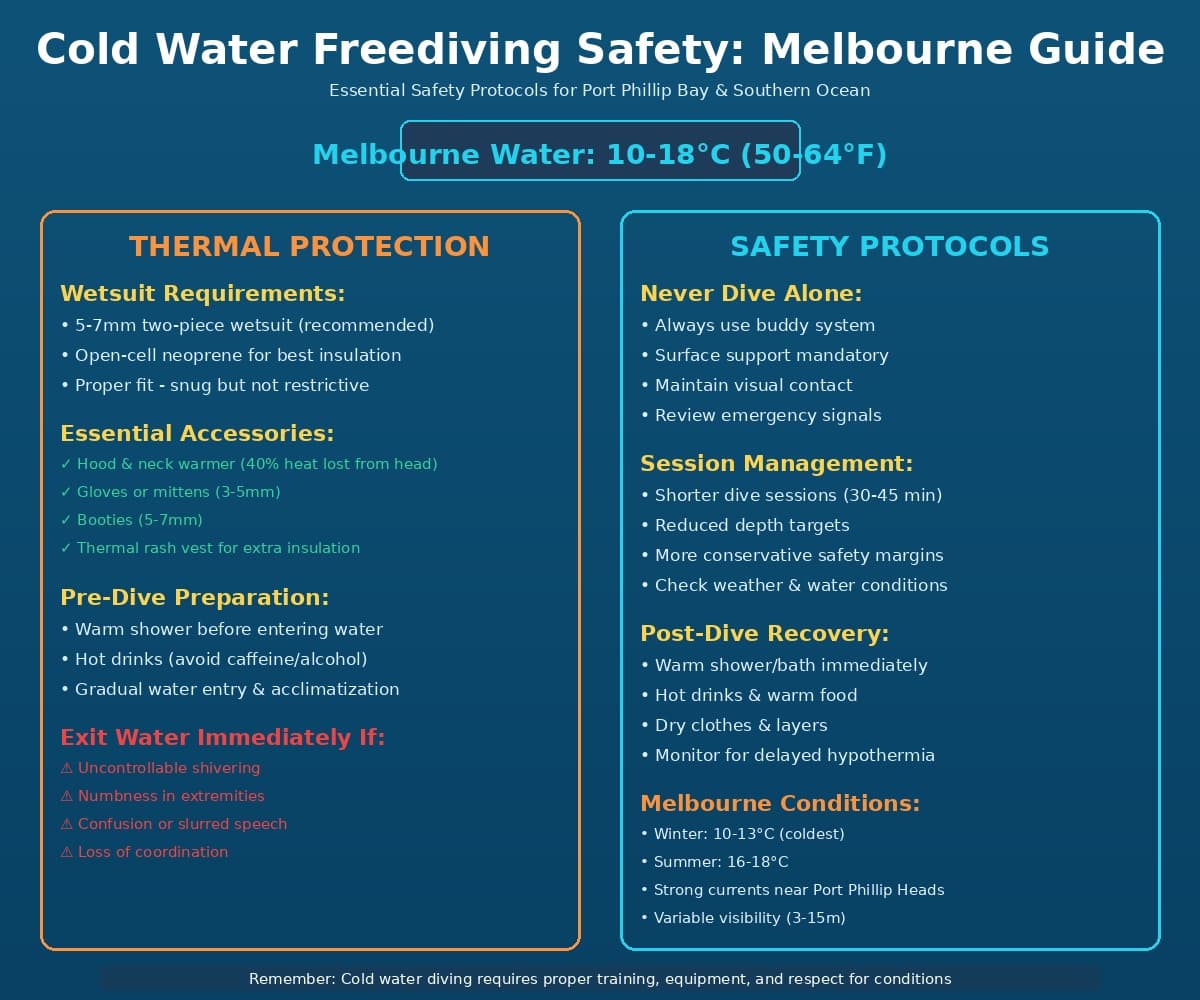
Water temperatures in Port Phillip Bay range from 10°C in winter to 21°C in summer. Even the "warm" end is colder than most tropical destinations year-round. This cold fundamentally changes how you freedive, what you need to wear, and what risks you need to manage.
How Cold Water Affects Your Body
Enhanced Mammalian Dive Reflex
Good news first: cold water triggers a stronger mammalian dive reflex (MDR). This ancient physiological response includes:
Bradycardia: Heart rate slowing
Peripheral vasoconstriction: Blood shifting from extremities to core
Blood shift: Additional blood moving to the chest cavity at depth
Splenic contraction: Release of oxygen-carrying red blood cells
Increased Oxygen Consumption
Less good news: cold water increases your body's metabolic rate. Your body works harder to maintain core temperature, consuming more oxygen in the process.
Net effect: While the MDR helps, increased metabolic demand means you may not see the breath-hold improvements you'd expect. You're often working harder just to stay warm.
Other Effects
Reduced dexterity: Cold affects fine motor control — adjusting equipment, operating cameras, signalling becomes harder
Increased urination: Cold water diuresis contributes to dehydration during longer sessions
Core temperature decline: Extended exposure progressively lowers core temperature
Cold Water Risks
Hypothermia
Hypothermia occurs when core body temperature drops below 35°C. In cold water freediving, this can develop gradually.
Stages:
Mild (35-32°C): Shivering, impaired coordination, reduced judgment
Moderate (32-28°C): Violent shivering then cessation, confusion, drowsiness
Severe (<28°C): Loss of shivering, profound confusion, cardiac risk
Why it's insidious: You're frequently holding your breath and focusing on internal states. You may not notice progressive cooling until it's significant. Judgment impairment can prevent you from recognising you need to exit.
Afterdrop
When you exit cold water, your core temperature may continue dropping for 15-30 minutes. This "afterdrop" occurs as cold blood from extremities returns to your core.
Important: Aggressive rewarming (like hot showers) can accelerate this process dangerously.
Cold Shock Response
Sudden immersion triggers gasp reflex, hyperventilation, increased heart rate and blood pressure, and potential for cardiac events. Most Melbourne freedivers adapt by entering water progressively.
Reduced Self-Rescue Ability
If something goes wrong in cold water, your ability to help yourself is compromised: reduced strength, impaired judgment, faster fatigue. This makes buddy support even more critical.
Exposure Protection for Melbourne
Wetsuit Recommendations by Season
Summer (Dec-Feb) 17-21°C: 5mm minimum, 5mm with hood option recommended
Autumn (Mar-May) 14-19°C: 5-7mm minimum, 7mm with hood recommended
Winter (Jun-Aug) 10-14°C: 7mm minimum, 7mm with hood and gloves essential
Spring (Sep-Nov) 12-16°C: 5-7mm minimum, 7mm with hood optional
When in doubt, wear more.
Open-Cell vs. Closed-Cell Wetsuits
Closed-cell (lined): Easier to put on, more durable, less effective insulation per millimetre, water can flush between skin and suit.
Open-cell (unlined): Require lubricant to put on, seal directly against skin, better insulation per millimetre, more fragile.
For serious Melbourne freediving, especially in winter, open-cell suits are generally worth the extra effort.
Hoods, Gloves, Booties
Hoods: Optional in summer, recommended in autumn/spring, essential in winter. A 5mm hood is standard.
Gloves: 3mm for balance of warmth and dexterity, 5mm for maximum warmth.
Booties: Neoprene socks or booties for cold feet and fin fit.
Weighting Adjustments
Thicker wetsuits require more weight. Calculate and test weighting changes before diving — incorrect weighting in cold water compounds problems.
Cold Water Diving Practices
Session Duration
Adjust expectations: In cold water, shorter sessions often produce better diving than marathon efforts. Quality over quantity.
Signs to end the session:
Persistent shivering
Numbness beyond initial cooling
Reduced coordination
Unusual fatigue
Impaired concentration
Exit before you have to. By the time you feel very cold, you're already significantly cooled.
Surface Interval Management
Between dives, you continue losing heat. During surface intervals:
Keep moving gently (treading water, light swimming)
Keep your head out of the water when not diving
Consider a surface float for supported rest
Monitor buddies for signs of cold
Buddy Safety in Cold
Watch for:
Excessive shivering (or sudden cessation)
Slow, slurred speech
Unusual confusion or poor decisions
Clumsy movements
Skin colour changes (pale, blue-tinged lips)
Be assertive: If your buddy is showing cold signs, insist on ending the session. Impaired judgment may prevent them from recognising their own state.
Pre-Dive and Post-Dive
Pre-dive warming: Light exercise before, warm drinks en route, start fully warm.
Post-dive warming:
Get out of the wind
Remove wet gear promptly
Dry off and dress in warm layers
Hat/beanie for head heat retention
Warm (not hot) drinks, gentle movement
Avoid: Hot showers immediately (can cause afterdrop and fainting), alcohol (accelerates heat loss), sitting around in wet gear.
Equipment and Emergency Considerations
Gear Function in Cold
Mask seals may be less flexible — check seal carefully
Fin straps can be stiff, harder to adjust
Weight releases — test with cold, numb fingers
Emergency Equipment
Multiple towels
Dry clothes for after diving
Emergency blanket
Ability to get to warmth quickly if needed
Thermos with hot drinks
Training Implications
If you're training in Melbourne, cold water considerations should be part of your education. This includes appropriate exposure protection, session duration management, recognition of hypothermia signs, buddy protocols in cold, and post-dive warming procedures.
If your course doesn't cover these topics — especially for open water in Melbourne conditions — that's a gap in your training.
Pool training typically occurs in heated water (27-29°C). The transition to Melbourne open water (potentially half that temperature) is significant. Expect your first cold water dives to feel very different.
Final Thoughts
Cold water freediving is rewarding. The clearer winter visibility, the different marine life patterns, the satisfaction of mastering challenging conditions — these are genuine benefits.
But cold water demands respect. The risks are real, the physiological effects are significant, and complacency can create problems.
Know your limits. Prepare appropriately. Dive with reliable buddies. End sessions before you have to.
Planning your next dive? Check our Melbourne Dive Sites Guide for location-specific conditions and safety information.
Melbourne's waters are world-class. Diving them safely year-round requires understanding and respecting what cold water demands.
Dive Melbourne — Complete Series
- 1Complete Guide to Freediving in Melbourne: Training, Providers & Safety
- 2Best Freediving Locations in Melbourne & Victoria: A Complete Guide
- 3Melbourne Freediving Courses Compared: An Independent Guide (2025)
- 4PADI vs Molchanovs Freediving Courses in Melbourne: Which Should You Choose?
- 5What to Expect from Your First Melbourne Freediving Course
- 6Freediving Safety in Cold Water: Melbourne & Victorian Conditions
- 7Freediving in Port Phillip Bay: Conditions, Sites & Safety